
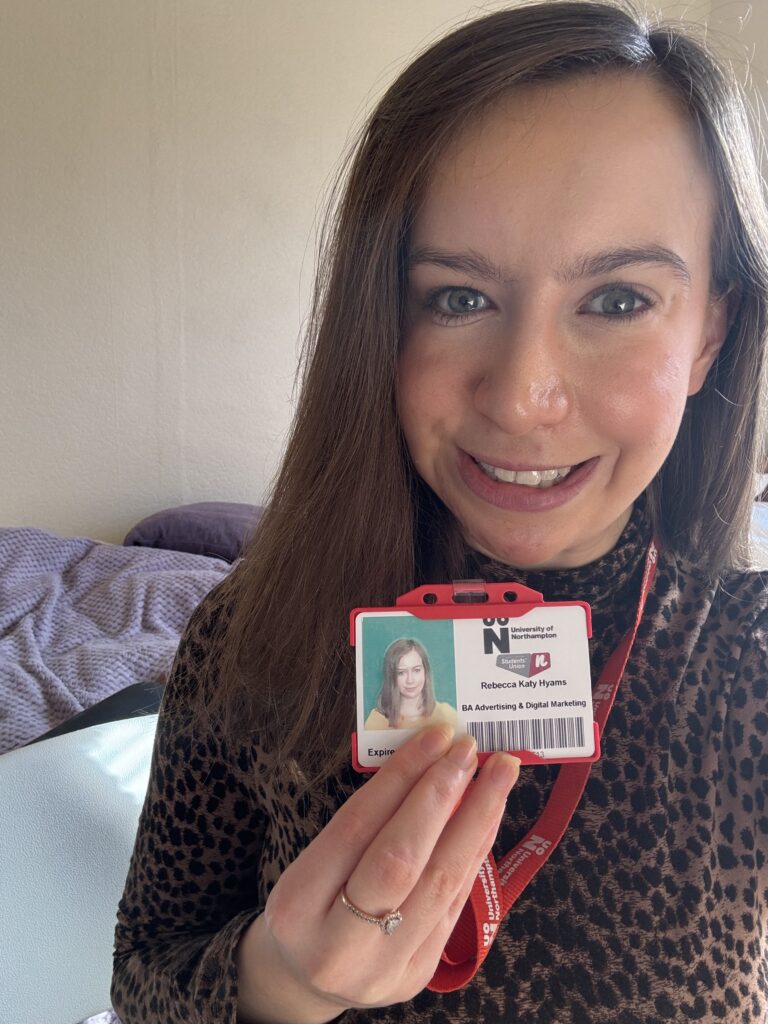
The transition of moving away from your family home to study in a new town or city can be extremely daunting for any young adult. This can be one-hundred times scarier when you have a disability which makes everyday tasks, or getting around independently, more challenging.
Being visually impaired, I wasn’t sure how I would cope moving to an unfamiliar area and having to get around independently for the first time. I remember trying to find blog posts and videos online from other visually impaired students sharing their experiences and tips on navigating university life.
If you are in the same boat I was in back in 2021, about to head off to University, I hope you find the following tips helpful.
1. Getting the most out of DSA support.
If you are in the UK and you’re close to starting University, I hope you are already aware of the Disabled Students Allowance. When applying for Student Finance, you can apply for DSA, and once you provide medical evidence of your disability, you’ll be invited to a “needs assessment”.
If you had support throughout your school education, similar support can likely be passed over into your Higher Educational studies.
A friend of mine who is also partially sighted and started University a year before me gave me the advice “what you don’t ask for, you don’t get”. The needs assessment is your opportunity to really paint the picture of your vision impairment, what things you struggle with, and then your assessor will work with you to suggest assistive technology and support that can be provided.
You may be eligible for what is called orientation and mobility training. This is where someone will meet you ahead of starting classes to help you learn your way around the university and find the frequent routes you’ll be taking.
I was also provided with a note-taker, who joins me in all my lectures, types out my notes, and emails them over to me, as I am unable to read the board with the presentation slides on. All my lecturers are made aware of my vision impairment and will ensure that I have a copy of the slide deck sent to my laptop. So that I can access the presentation that way.
2. Get to know the campus and surrounding area ahead of the big move.
I went and had a private campus tour before deciding on my first University choice. My mum and I really liked that the campus was very small, with just three lecture buildings all within a few minutes’ walk from each other.
Additionally, just before moving, I went back up with my parents to have a walk around the town, search out some of the shops, and see how close everything was to the university. My accommodation in first year was located on campus, and the walk from campus into the town centre was about 10 minutes, with only one busy road to cross.
3. Google Maps and Assistive technology will be your best friend.
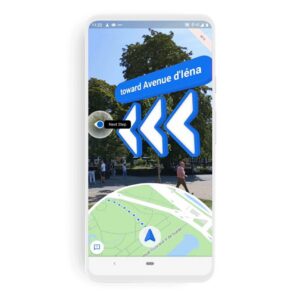
Following on from becoming familiar with your surroundings, I relied heavily (and still do) on using Google Maps on my phone to get to and from places.
Before going somewhere new, I like to use Google Maps immersive view feature to “walk” the directions from the comfort of my room, before actually going and doing it in real life.
Additionally, when there are things which I am unable to read, I will use my phone’s camera to zoom in.
4. Make others aware of your sight loss, and let them know ways in which they can support you.
Being honest about your visual impairment can be emotionally challenging, but it can be really important for having others become educated and conscious of small adaptations that they can make to ensure you feel included and safe.
Before coming to university, I had pretty much always been around people who had grown up with me and were aware of my visual disability; however, I was now in a new environment, with people who knew nothing about me.
I don’t use a long white cane or guide dog, so my disability is invisible until I do something which makes my sight loss apparent. When I was making friends and arranging to meet up with them, I had to let them know that I won’t be able to see them until standing very close, and therefore, we need to be very specific about where we will be meeting, and if you see me first, to come up and say hi.
Making sure the people around you are aware of your sight loss is particularly important if you choose to go to parties or nightclubs, so that they are conscious not to leave you on your own, unable to find the group again.
5. Learn the public transport routes around the area.
Something which I was very nervous to do before doing it often at uni was getting on trains and buses alone.
I rely on the TrainLine app for all live train time information, as I can’t read the digital screens on train platforms. You can purchase the Disabled Persons Bus pass, which gives you one-third off train ticket prices, which is helpful if you use trains.
For buses, I use Google Maps to find buses and the routes I need to get to places. Just before starting university, I found out that being visually impaired, I am eligible to get a free bus pass through your local council. This has been great for getting buses free of charge all around England.
If you are ever unsure if you are at the right bus or train platform, never be afraid to ask someone. Most people will be helpful if you let them know that you are visually impaired.
Being visually impaired and moving to new surroundings is one tough journey, but it is not an impossible one. With the right support and resources in hand, you will be able to grow so much as a person, and for that, I am really proud of you.
You have got this.
Becky. X


I want to to thank you for this very good read!! I certainly loved every bit of it.
I have you book-marked to look at new things you post…
My blog post vitamintoto situs terpercaya (tw.8fun.net)
I absolutely love your site.. Great colors & theme. Did you create this site
yourself? Please reply back as I’m hoping to create my
very own site and would like to learn where you got this from or what
the theme is named. Kudos!