

Everybody deserves to have the opportunity to be able to travel independently, be that for work or leisure. However, for many people living with a disability, traveling is something of a luxury as it can come with barriers.
Those who are registered as blind or partially sighted generally cannot drive. Therefore, often when I tell people that I am unable to drive, they reply with something along the lines of “Well you don’t really need to be able to drive these days with taxis and public transport”.
Now, there are a few reasons why this comment bothers me, but one issue is that while it’s true that we are reliant on public transport, there are also many access barriers to using buses and trains independently. A big struggle that some people affected by sight loss have with buses is struggling to see whether the bus approaching is the correct bus. Additionally, it can then be hard to know when you’re at the stop that you want to get off at.
Lots of train stations are also inaccessible for navigating around. I could keep naming more barriers, however, hopefully, I have provided enough insight that while yes, public transport can be helpful for people who do not drive, they’re still not quite as simple to navigate for someone with a vision impairment as they are for someone fully sighted.
Inaccessible travel and its impact on employment
One in four working-age people living with sight loss in the UK are unemployed. While a large reason for that is due to poor public attitudes from employers assuming that someone with a vision impaired will be incapable of doing their job, this statistic is also caused by the barrier of physically not being able to get to an office.
On a positive note
Don’t worry, I don’t have all negative things to say on here. Now that I have brought attention to some of the barriers that come with traveling when you have a vision impairment, the real reason I was inspired to write this blog post was to celebrate things that have made tackling public transport more accessible for blind and partially sighted people.
Technology for the win
Phones and apps have made traveling independently much easier. While I have not made use of this app personally, there is a great app out there called Be My Eyes – this enables a person with a vision impairment to make a call on the app, and there is always a volunteer from somewhere around the globe, available to answer and essentially be that persons’ eyes by the callee holding their phone up so the volunteer can describe the surroundings or read something for them.
Another cool app that is slowly being used more, is the NaviLens app. You may have noticed that some products as well as places, have colorful barcodes called a NaviLens QR code. The app allows you to scan around a room and your phone will pick up if there is a NaviLens QR code close by, it will then read out the information that the QR code holds. Why this is so good is that some big city train stations and airports have NaviLens codes which provide visually impaired people with information for getting around that building.
Less fancy, but for people who still have some useful vision, magnifiers and zooming in with a mobile phone camera can also help for reading information.
Large train stations also have passenger assistance at hand. You can pre-book passenger assistance either online, by calling up, or on the mobile app, by selecting which train you’ll be getting and making a note of what support you will need.
My experience commuting to London

Recently, the opportunity arose for me to have to travel to London for the first time on my own. I have been pretty open on here with sharing that before moving away from home for university, I had very little confidence in going anywhere independently.
My eyesight will not improve, that is the reality of it (unless we get a treatment for Nystagmus), so my attitude and confidence needed to improve instead. I don’t want to live a life where my opportunities are limited by my disability, so I have found strategies that help me be able to do the things I want to do.
Firstly, I reached out to a visually impaired content creator who I have a social media connection with, Seren Jaye (@otters.have.pockets), after seeing a TikTok that she had done about using the Passenger Assistance app for traveling by train, before that, I hadn’t heard of it.
I booked assistance to help me get from the station to the bus stop that I needed to locate outside London Marylebone Station.
Unfortunately, after waiting at the assistance point on the platform for 15 minutes, there was still no one available to help me and I was getting too short on time to carry on waiting. I ended up going over to a staff member and asking them to point me in the right direction and then I was able to use the augmented reality (A.R) function on google maps to direct me to the bus stop. However, while this was stressful, thankfully, I did end up making it. The fact that passenger assistance was not available to help is still quite bad, as there are many people with a disability who would not be able to get where they needed to be without passenger assistance.
Anyway, the situation was redeemed once I got onto the bus and discovered that London buses have audio announcements for each bus stop. This is something I had not experienced before, but it put my mind to ease knowing that the bus would say when the next stop was going to be the one that I needed. Audio announcements are not just beneficial for visually impaired people, but for anyone who is unfamiliar with an area, making this a universally accessible feature, which we love to see (excuse the pun!)
So, what is the deal with accessible travel being of so much value?
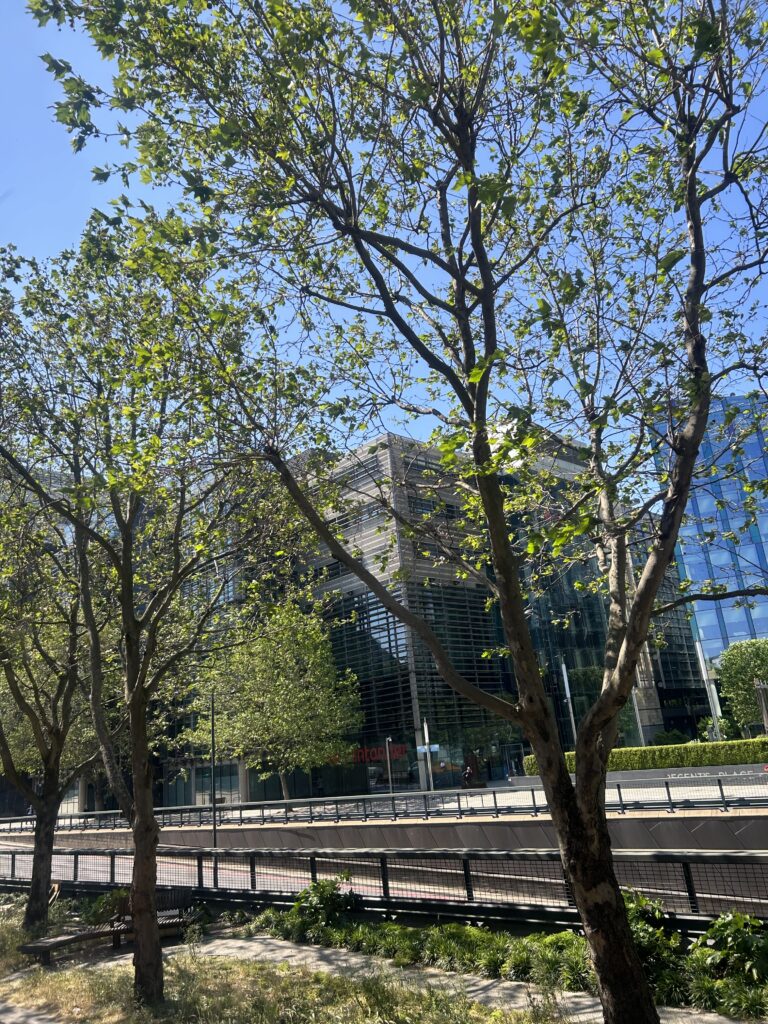
I once feared that getting a job in London was off-limits to me and considering this city in England has the best job opportunities, the prospect seemed quite unfortunate. Even if I don’t get a job in London, it is still nice to have the opportunity open, am I right?
While the attraction and novelty of doing the commute decrease massively for people who do it on a frequent basis, it felt like a massive achievement once I made it back home at the end of the day. Yes, getting a train and bus to an office in London isn’t a huge deal to most people. However, coming to realise that there are options available to make commuting more accessible, brings a lot of joy and reassurance. I hope that access to public transport continues to become more accessible to people over time, as an accessible and inclusive world makes living with a disability far more manageable.
As always, I really appreciate you taking the time to read this blog post. Let me know your thoughts!
Becky. X

